
Objective
The primary objective of this project was to digitize and automate internal business workflows that were previously managed through emails, spreadsheets, and manual approvals. These fragmented processes led to delays, lack of visibility, and inconsistent execution across departments.
The organization aimed to create a unified platform where workflows such as approvals, requests, and task management could be managed centrally, ensuring transparency and accountability.
Additionally, the goal was to reduce manual intervention, improve process tracking, and enable faster decision-making through structured and automated workflows.
Customer Requirements
Workflow Requirements
Approval workflow automation
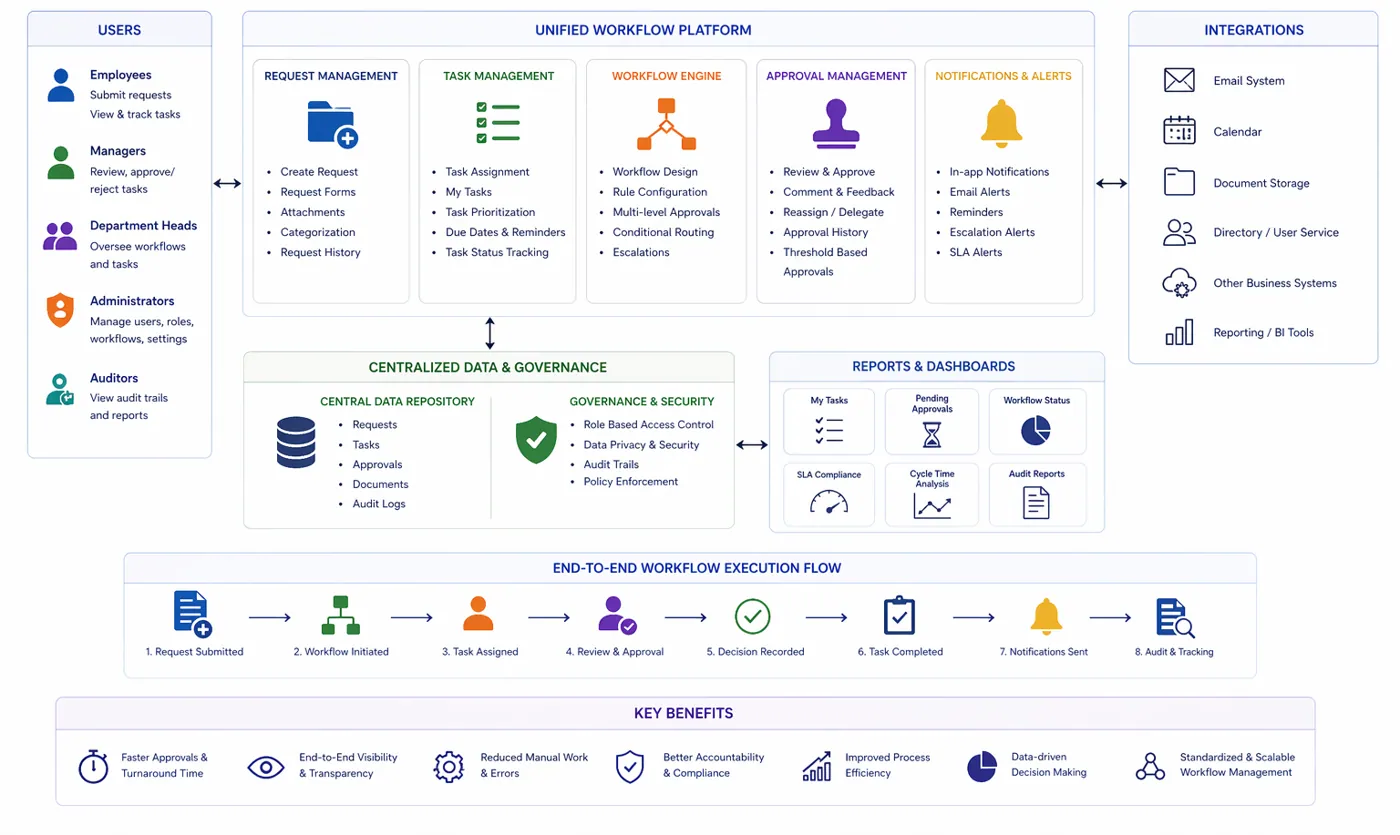
The platform was designed to automate structured approval processes across finance, HR, and operations. This ensured consistency, reduced manual intervention, and minimized delays in decision-making.
Task and request management
A centralized system was implemented for employees to raise, track, and manage requests efficiently. This improved accountability, transparency, and overall process visibility.
Custom workflow configuration
The platform supported configurable workflows to meet the unique requirements of different departments. This provided flexibility, adaptability, and ensured alignment with business-specific processes.
Operational Requirements
Centralized dashboard
A unified dashboard was implemented to provide real-time visibility into all ongoing workflows and operations. This enabled management to monitor progress, identify bottlenecks, and make informed decisions.
Process tracking
Each request and task was tracked throughout its lifecycle, from initiation to completion. This ensured transparency, improved accountability, and provided clear visibility into process status.
Notification system
Automated notifications were implemented to alert users about pending actions, approvals, and updates. This improved responsiveness, reduced delays, and ensured timely task completion.
Compliance & Reporting Requirements
Audit trails
The platform recorded every action within the workflow, including approvals, updates, and status changes. This ensured full traceability, accountability, and compliance with organizational and regulatory requirements.
Reporting & analytics
Built-in reporting and analytics provided insights into workflow performance, bottlenecks, and turnaround times. This enabled data-driven decision-making and continuous process improvement.
User Experience
Easy-to-use interface
The platform was designed with a simple, intuitive interface to ensure ease of use across all departments. This reduced training effort, improved user adoption, and enabled faster execution of daily tasks.
Role-based access
Role-based access controls were implemented to assign permissions based on user roles and responsibilities. This ensured secure, controlled access to workflows and maintained proper governance across the system.
Our Solution
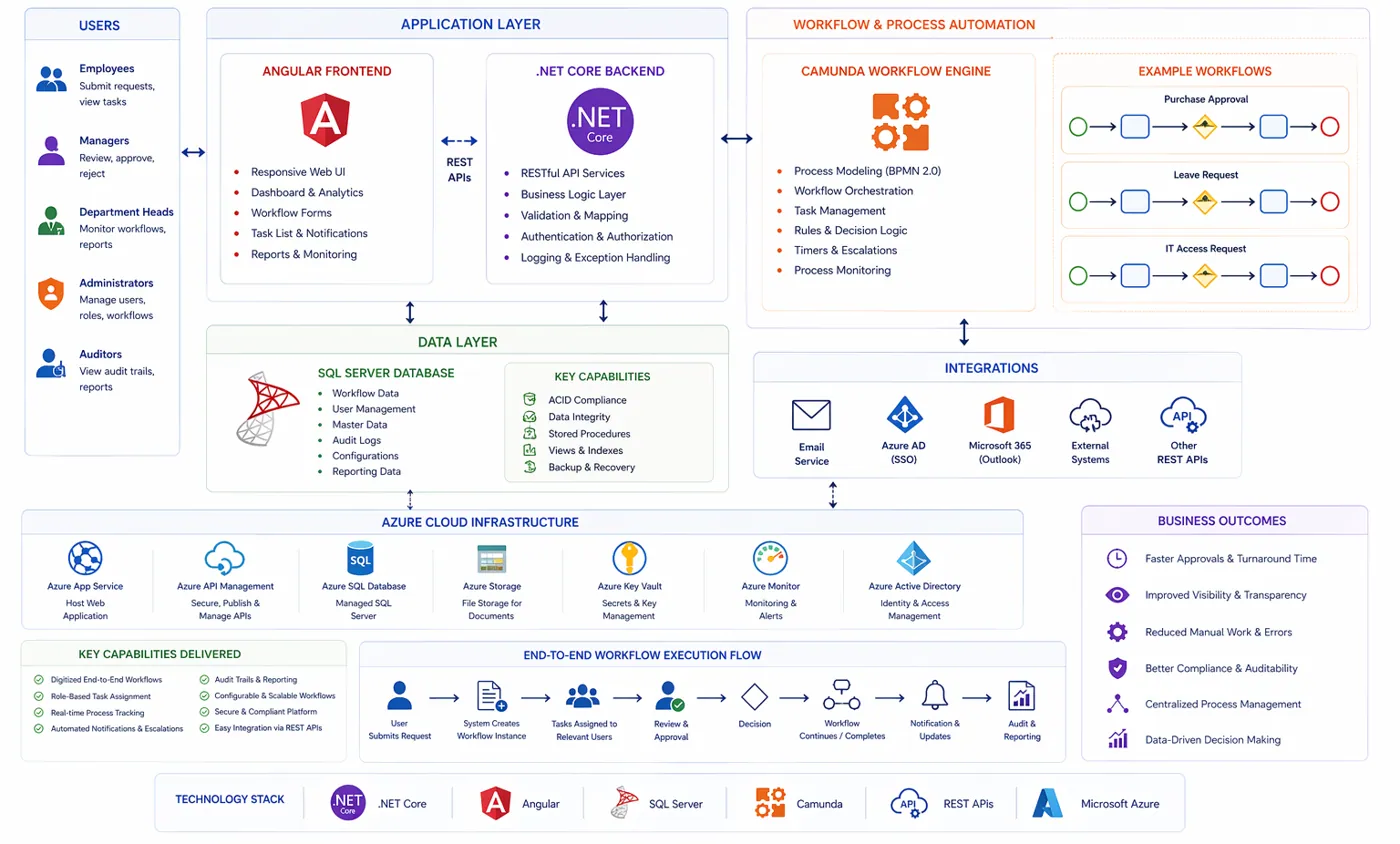
We developed a flexible workflow management platform that automates internal processes, improves visibility, and ensures efficient task execution across departments.
Workflow Automation Engine
A rule-based engine was designed to automate approvals, task routing, and process flows. This ensured consistent execution, reduced manual intervention, and improved operational efficiency.
Custom Workflow Builder
A configurable workflow builder enabled departments to design and modify workflows based on their specific business needs. This provided flexibility and adaptability across different operational processes.
Centralized Dashboard
Real-time dashboards provided a unified view of all workflows, tasks, and approvals. This improved monitoring, visibility, and data-driven decision-making.
Notification & Alert System
Automated notifications and alerts were implemented to inform users of pending tasks, approvals, and updates. This ensured timely action, improved responsiveness, and reduced process delays.
Audit & Reporting Module
The system tracked all workflow activities and generated detailed reports. This supported compliance, transparency, and performance analysis.
Role-Based Access Control
Secure role-based access controls were implemented to manage user permissions. This ensured data security, controlled access, and proper governance across the platform.
Technologies Used
Key Outcomes
The implementation significantly improved process efficiency and reduced approval turnaround time. It enhanced transparency and accountability across departments.
Additionally, automation reduced manual workload and improved overall operational performance, enabling teams to focus on higher-value tasks.
The centralized system also improved visibility into workflows, supporting better decision-making and driving continuous process optimization across the organization.
Conclusion
The Workflow & Internal Tools platform successfully transformed fragmented processes into structured and automated workflows. It improved operational efficiency, reduced delays, and enhanced collaboration.
The solution also increased transparency and control across business operations by providing clear visibility into workflows and decision points.
It provides a scalable foundation for continuous process improvement and long-term business growth.