
Objective
The primary objective of this project was to transform a large multi-specialty hospital into a fully integrated digital healthcare ecosystem capable of supporting modern clinical and operational demands. The existing environment relied heavily on fragmented systems and manual processes, which limited visibility, slowed decision-making, and increased the risk of errors.
The hospital aimed to enhance patient safety by ensuring accurate, real-time access to clinical data across all departments, enabling healthcare professionals to make faster and more informed decisions. A key focus was to reduce dependency on paper-based workflows and disconnected systems by introducing a centralized platform that streamlines patient information, clinical records, and operational processes.
Additionally, the project sought to improve overall operational efficiency by automating critical workflows such as patient admissions, discharges, resource allocation, and reporting. By leveraging digital tools and real-time analytics, the hospital aimed to optimize resource utilization, reduce patient waiting times, and enhance the overall quality of care delivery.
Ultimately, the goal was to establish a scalable, secure, and future-ready digital infrastructure that not only improves current hospital performance but also supports long-term innovation, including telehealth services, data-driven decision-making, and continuous improvement in patient outcomes.
Customer Requirements
Clinical Requirements
Centralized Electronic Medical Records (EMR)
The hospital required a unified system to store patient records across departments. This ensures seamless data access, improves diagnosis accuracy, and eliminates duplication.
Real-time patient monitoring
Doctors needed instant visibility into patient vitals and condition changes. This enables faster response during emergencies and improves clinical outcomes.
Medication safety and alerts
The system had to detect drug interactions and incorrect dosages automatically. This significantly reduces medical errors and enhances patient safety.
Operational Requirements
Automated patient admission and discharge
Manual processes were slowing down patient flow and increasing waiting time. Automation ensures faster processing and better patient experience.
Bed and resource management
Real-time tracking of beds and resources was required to optimize hospital utilization. This helps in reducing delays and improving service efficiency.
Reduced paperwork
The hospital aimed to move towards a paperless environment. Digital documentation improves accuracy and reduces administrative workload.
Data & Compliance Requirements
Secure data handling and privacy compliance
Patient data needed to be protected with strong security measures. Compliance with healthcare regulations was a critical requirement.
Audit trails and reporting
Every system activity needed to be logged for transparency. This ensures accountability and supports regulatory audits.
Patient Experience
Faster service and reduced waiting time
Patients expected quicker consultations and streamlined hospital processes. The system needed to reduce delays at every stage.
Digital access to health records
Patients wanted access to their medical history and reports online. This improves transparency and engagement in their care journey.
Our Solution
We developed a scalable and integrated Healthcare Management System that connects clinical, operational, and administrative workflows into a single platform, enabling real-time insights and automation.
Electronic Medical Records (EMR)
A centralized platform that unifies patient data across all departments. It ensures accurate and real-time access to medical information.
Clinical Decision Support
AI-powered tools provide alerts, risk predictions, and treatment recommendations. This enhances clinical accuracy and patient safety.
Hospital Operations
Smart systems manage bed allocation and patient workflows efficiently. This reduces delays and improves hospital throughput.
Digital Workflows
Paperless processes including prescriptions and documentation. This reduces manual errors and increases productivity.
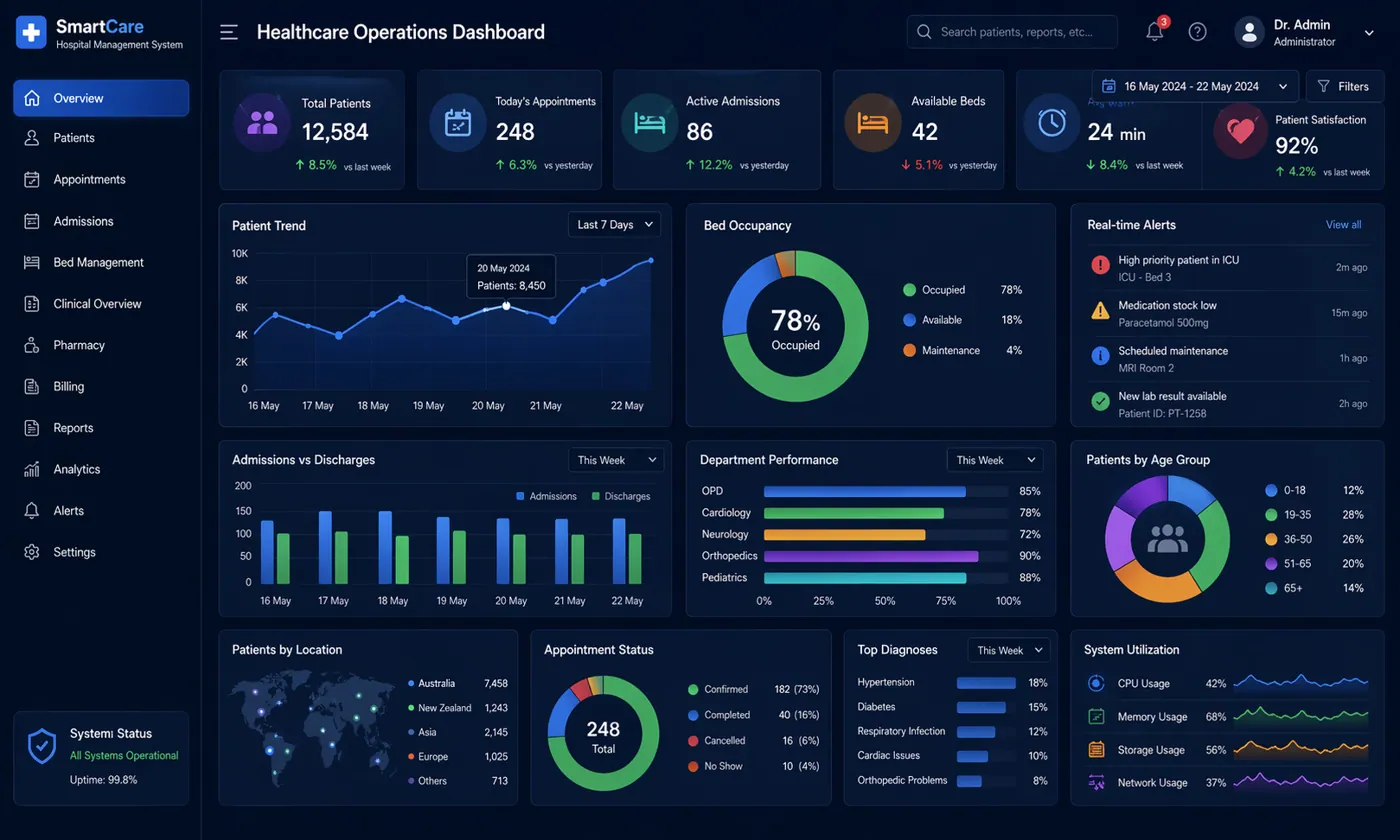
Analytics Dashboard
Real-time dashboards provide insights into hospital performance and KPIs. Decision-makers can optimize operations effectively.
Telehealth Integration
Enables remote consultations and patient monitoring. This extends healthcare services beyond physical hospital boundaries.
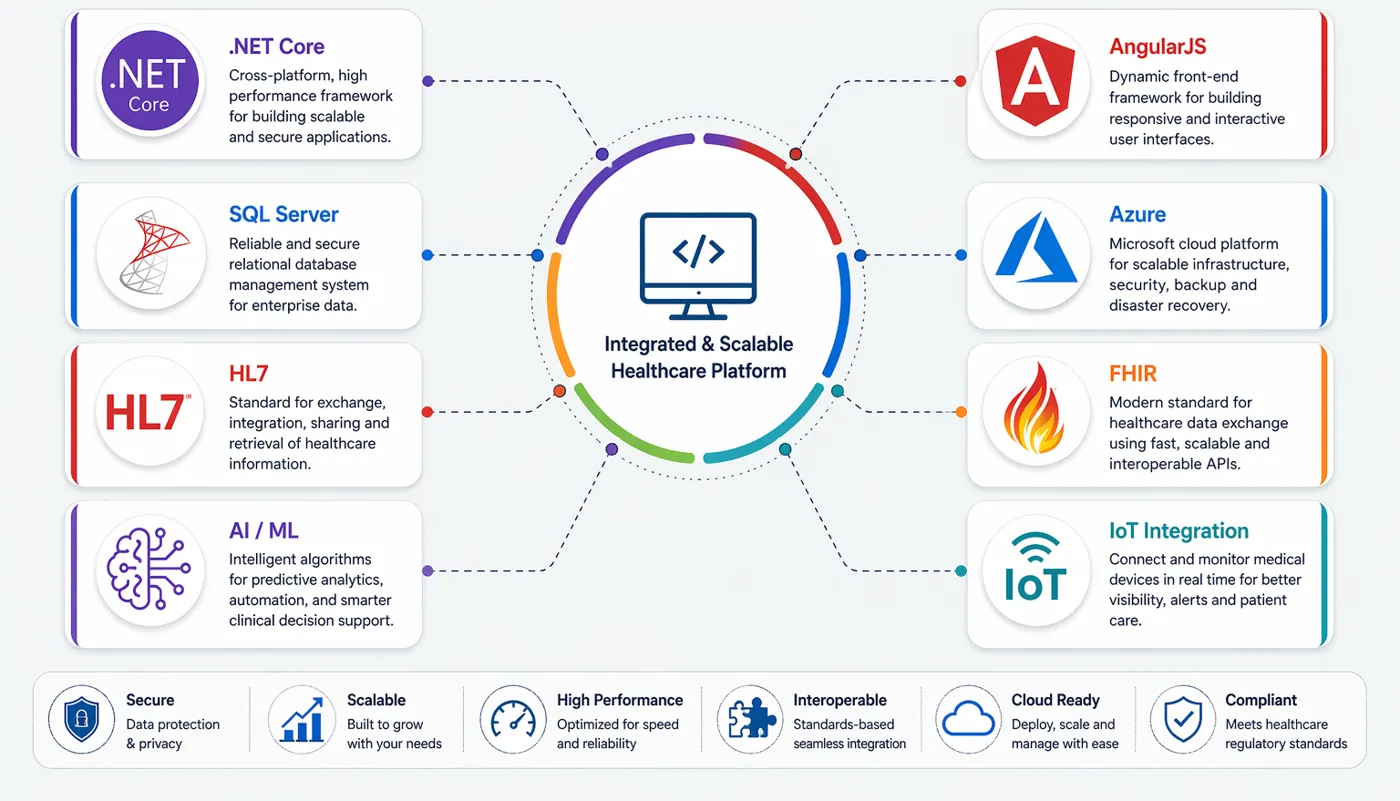
Technologies Used
Key Outcomes
The implementation resulted in improved patient safety, reduced administrative workload, faster service delivery, and enhanced overall hospital efficiency. It also enabled real-time visibility into hospital operations, allowing leadership to make data-driven decisions with greater confidence. Furthermore, the system improved collaboration between departments, ensuring a more coordinated and seamless patient care experience.
Conclusion
The Healthcare Management System successfully transformed the hospital into a digitally advanced healthcare provider. It improved both operational performance and patient satisfaction, setting a benchmark for modern healthcare systems. The scalable architecture ensures the hospital is well-prepared to adopt future innovations such as AI-driven diagnostics and advanced telehealth services. This transformation not only strengthened current capabilities but also established a strong foundation for continuous digital growth and excellence in patient care.