
Objective
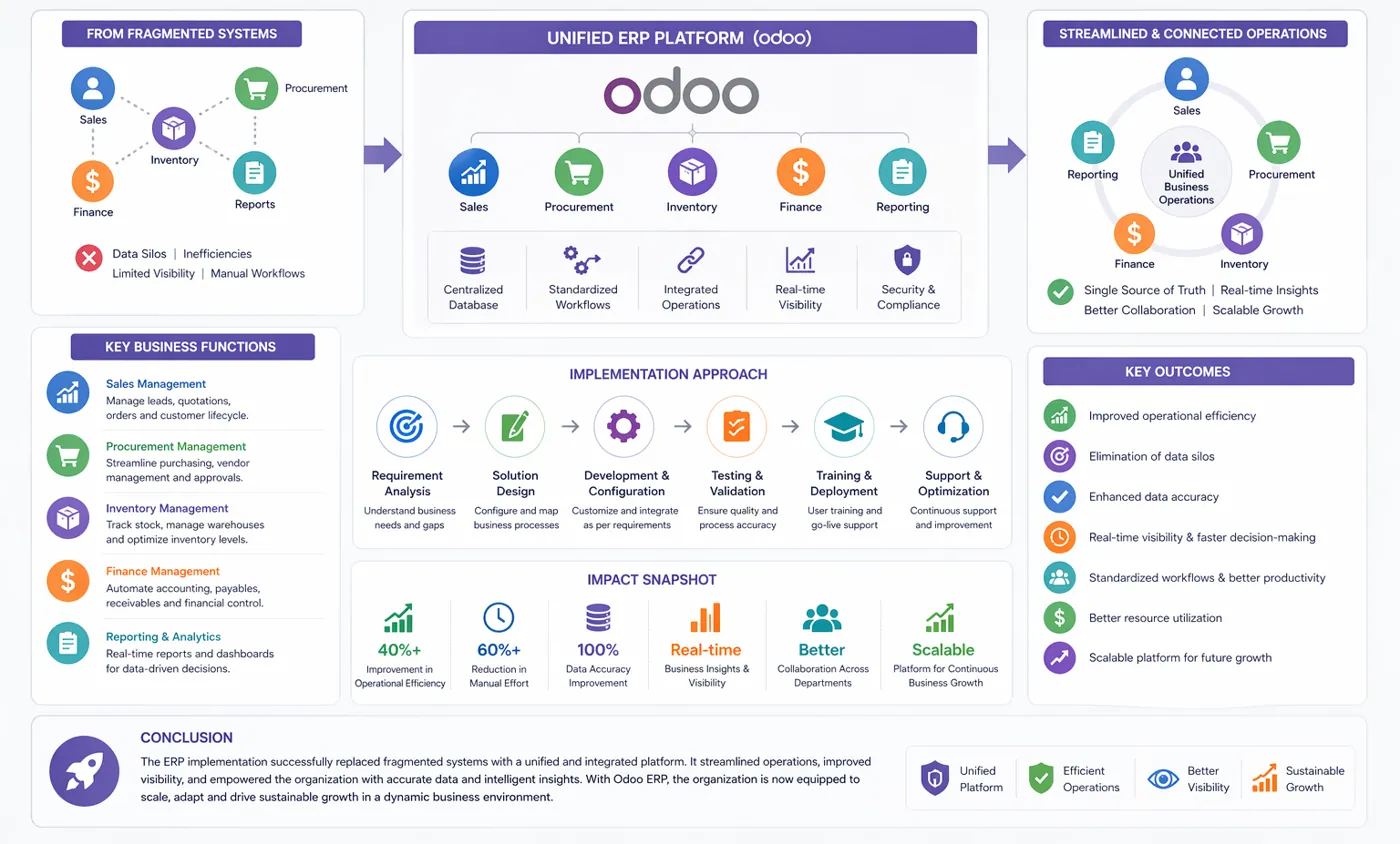
The primary objective of this project was to replace fragmented systems and manual workflows with a centralized ERP platform that integrates all core business functions. The organization was operating with multiple disconnected applications, leading to inefficiencies, data inconsistencies, and limited visibility.
The goal was to implement a unified system to manage sales, procurement, inventory, finance, and reporting within a single platform, ensuring seamless data flow across departments.
Additionally, the solution aimed to improve data accuracy, enable real-time decision-making, and enhance collaboration while supporting scalable business growth.
Customer Requirements
Business Process Requirements
Centralized system
The client required a single platform to manage all business operations. This eliminates data silos and ensures consistency across departments.
Process standardization
Business workflows needed to be standardized across functions. This improves efficiency and ensures uniform execution.
Integrated operations
Seamless integration between sales, inventory, finance, and procurement was required. This ensures smooth data flow and reduces duplication.
Operational Requirements
Real-time data visibility
The organization needed instant access to business data and KPIs. This supports faster and informed decision-making.
Scalability
The system had to support increasing transaction volumes. It should adapt easily to business growth.
Improved efficiency
Manual processes needed to be minimized through system-driven workflows. This reduces delays and enhances productivity.
Compliance & Reporting Requirements
Audit trails
All transactions needed to be traceable within the system. This ensures accountability and compliance.
Advanced reporting
The organization required detailed reports and dashboards. This supports strategic decision-making.
User Experience
User-friendly interface
Employees needed an intuitive system with minimal learning curve. This ensures faster adoption.
Centralized dashboard
Users required a unified view of operations and key metrics. This improves visibility and control.
Our Solution
We implemented a comprehensive ERP solution using Odoo, integrating all core business functions into a unified platform to improve operational efficiency and data transparency.
ERP Implementation & Configuration
Core modules including Sales, Purchase, Inventory, and Accounting were deployed. This enabled seamless end-to-end operations.
Business Workflow Optimization
Existing processes were streamlined within the ERP system. This improved efficiency and reduced operational complexity.
System Integration
The ERP was integrated with existing tools and systems. This ensured continuity without disrupting operations.
Custom Development
Custom features were built to meet specific business requirements. This enhanced flexibility and usability.
Reporting & Dashboards
Real-time dashboards provided insights into business performance. This supports better decision-making.
Scalable ERP Framework
The solution was designed to scale with business growth. This allows easy expansion of modules and users.
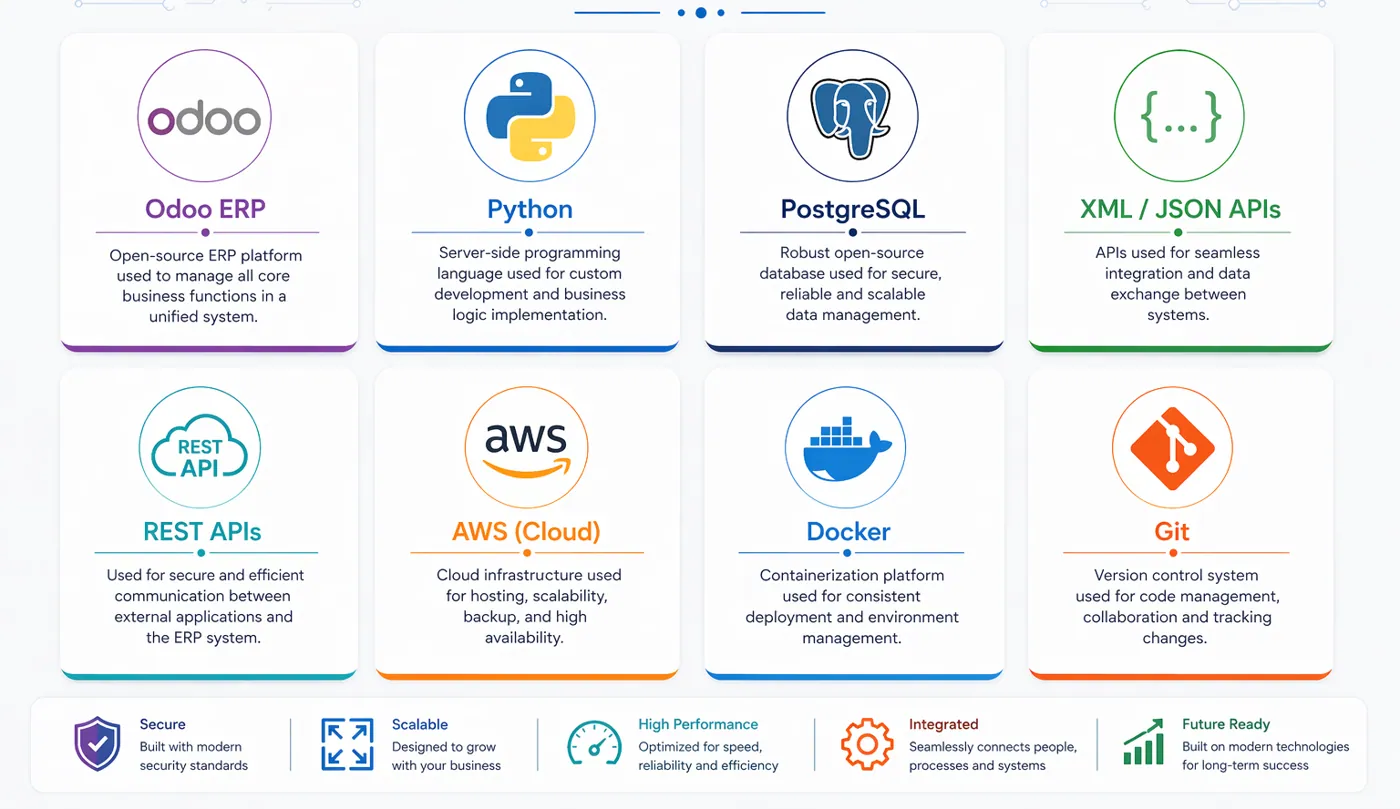
Technologies Used
Key Outcomes
The implementation improved operational efficiency by centralizing all business processes into a single platform. It eliminated data silos, enhanced data accuracy, and enabled real-time decision-making. The organization experienced better productivity, improved resource utilization, and stronger overall business performance.
Conclusion
The Odoo ERP implementation successfully transformed fragmented operations into a unified, efficient system. It improved visibility, streamlined workflows, and enabled scalable growth. The organization is now better equipped to manage operations effectively and adapt to future business needs.