
Objective
The primary objective of this project was to implement a centralized Smart Monitoring IoT Platform capable of collecting, analyzing, and visualizing real-time data from distributed devices and sensors. The existing system lacked visibility into operational performance, resulting in inefficiencies, delayed responses, and increased downtime.
The organization aimed to improve operational efficiency by enabling real-time monitoring of equipment, environmental conditions, and system performance. A key goal was to reduce manual inspections and reactive maintenance by adopting predictive and automated monitoring capabilities.
Additionally, the solution was expected to enhance safety and compliance by providing instant alerts for anomalies and critical conditions. By leveraging IoT and analytics, the company sought to establish a scalable and intelligent infrastructure for future growth and automation.
Customer Requirements
Monitoring Requirements
Real-time device monitoring
The client required continuous tracking of machines, sensors, and operational parameters. This ensures immediate visibility into performance and reduces response time for critical events.
Custom module development
The system needed tailored Odoo modules to align with specific business workflows. This ensures flexibility and supports unique operational requirements.
End-to-end implementation
A complete setup from initial configuration to final deployment was required. This ensures a smooth rollout and consistent system performance across all stages.
Third-party integrations
The platform needed to connect with external tools like payment gateways, shipping, and CRM systems. This enables seamless data flow and unified business operations.
Data migration and system upgrade
Existing data had to be securely migrated to the new system without loss or disruption. This ensures continuity and preserves business-critical information.
Operational Requirements
Automated data collection
Manual data logging was inefficient and error-prone. The system needed to automatically collect and process data from multiple devices.
Centralized dashboard
A unified dashboard was required to visualize all operational data in one place. This improves decision-making and operational control.
Scalability
The platform needed to support increasing numbers of devices and data streams. This ensures long-term usability and system expansion.
Data & Compliance Requirements
Secure data transmission
Data from IoT devices needed to be securely transmitted and stored. Encryption and authentication were essential to prevent unauthorized access.
Data logging and reporting
Historical data tracking was required for analysis and compliance. This enables trend analysis and performance optimization.
User Experience
Intuitive interface
Users needed a simple and user-friendly dashboard. This reduces training time and improves usability.
Mobile accessibility
Access to monitoring data via mobile devices was essential. This ensures real-time visibility anytime, anywhere.
Our Solution
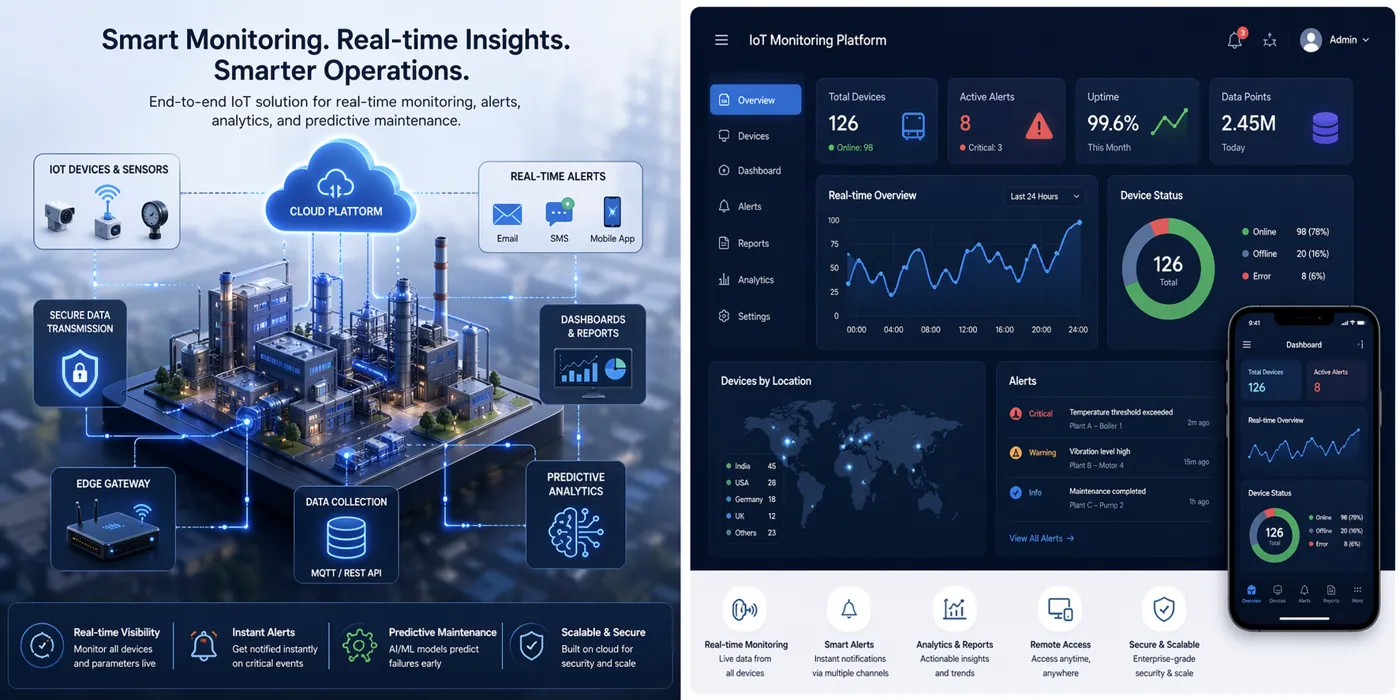
We developed a robust Smart Monitoring IoT Platform that integrates sensors, cloud infrastructure, and analytics to deliver real-time insights and automated control capabilities.
IoT Device Integration
Seamless connectivity with sensors and devices for real-time data acquisition. Supports multiple protocols and device types.
Real-Time Monitoring Dashboard
Interactive dashboards provide live data visualization and system status. Enables quick identification of issues and trends.
Alert & Notification System
Automated alerts via SMS, email, or app notifications. Ensures immediate response to critical conditions.
Predictive Analytics
AI-driven analysis predicts potential failures before they occur. Helps in proactive maintenance and reduces downtime.
Cloud-Based Platform
Scalable infrastructure for data storage and processing. Supports remote access and high availability.
Mobile & Web Applications
Cross-platform applications for monitoring and control. Provides flexibility and accessibility for users.
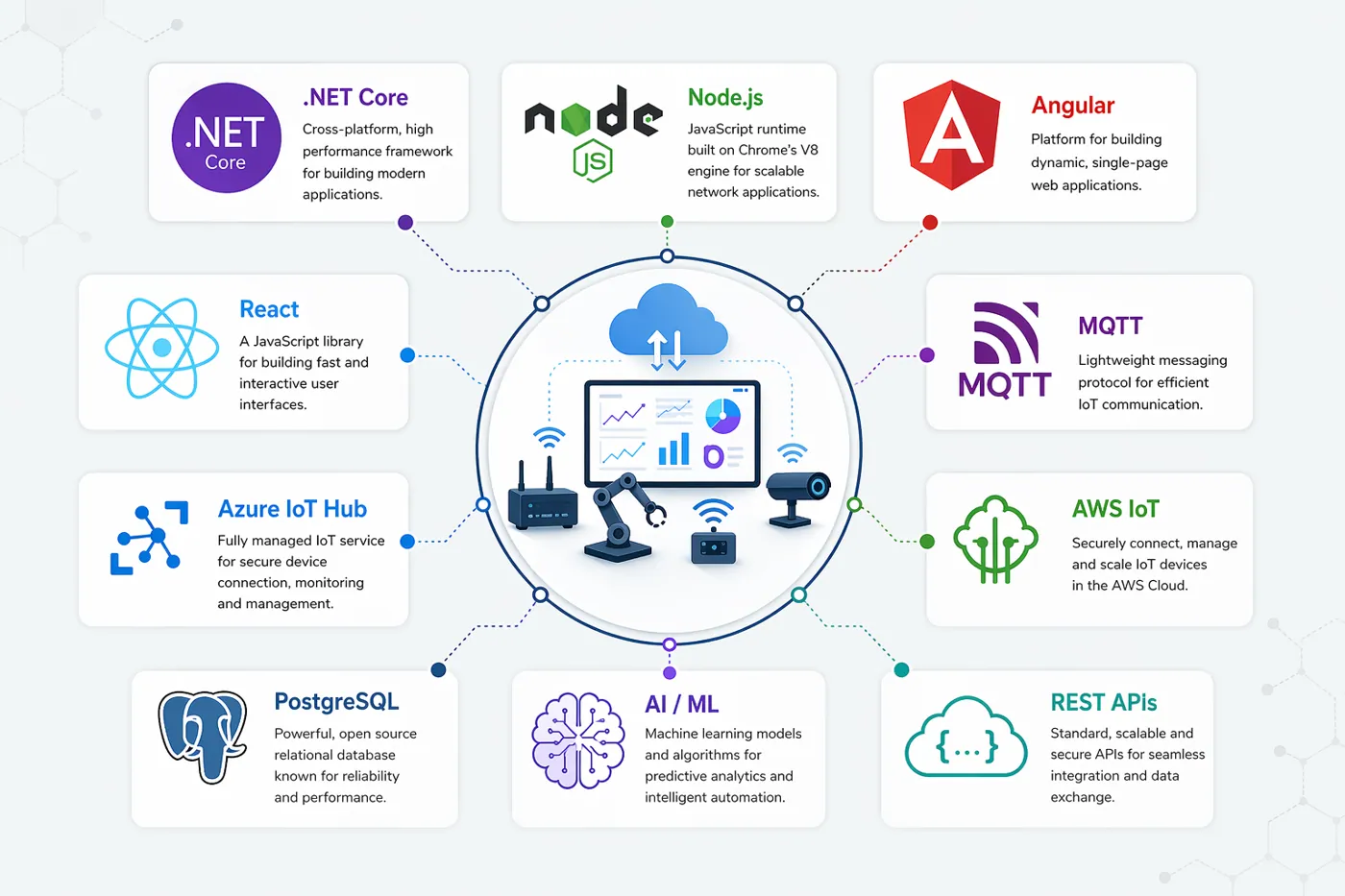
Technologies Used
Key Outcomes
The implementation resulted in improved operational visibility, reduced equipment downtime, and enhanced system reliability. It enabled real-time monitoring and faster decision-making, significantly improving overall efficiency. Additionally, predictive analytics helped reduce maintenance costs and prevent unexpected failures.
Conclusion
The Smart Monitoring IoT Platform successfully transformed the organization’s operations into a data-driven and automated environment. It improved efficiency, safety, and scalability while enabling real-time insights and proactive decision-making. The solution provides a strong foundation for future IoT expansion and intelligent automation initiatives.