
Objective
The primary objective of this project was to build a centralized marketing analytics platform that provides real-time visibility into campaign performance across multiple channels such as social media, search engines, email marketing, and paid advertisements.
The organization was facing challenges due to fragmented data sources and lack of consolidated reporting, which made it difficult to measure ROI and optimize marketing strategies effectively.
The goal was to enable data-driven decision-making by providing unified dashboards, real-time insights, and predictive analytics to improve campaign performance and maximize return on investment.
Customer Requirements
Data Integration Requirements
Multi-channel data integration
The system was designed to aggregate marketing data from platforms such as Google Ads, Facebook, email tools, and CRM systems. This provided a unified view of campaign performance across all channels.
Real-time data synchronization
Marketing data was synchronized in real time to ensure up-to-date insights and accurate reporting. This enabled timely decision-making and quick campaign optimization.
Data normalization
Data from multiple sources was standardized into a consistent format. This ensured accurate comparison, reliable reporting, and meaningful performance analysis across channels.
Analytics & Reporting Requirements
Customizable dashboards
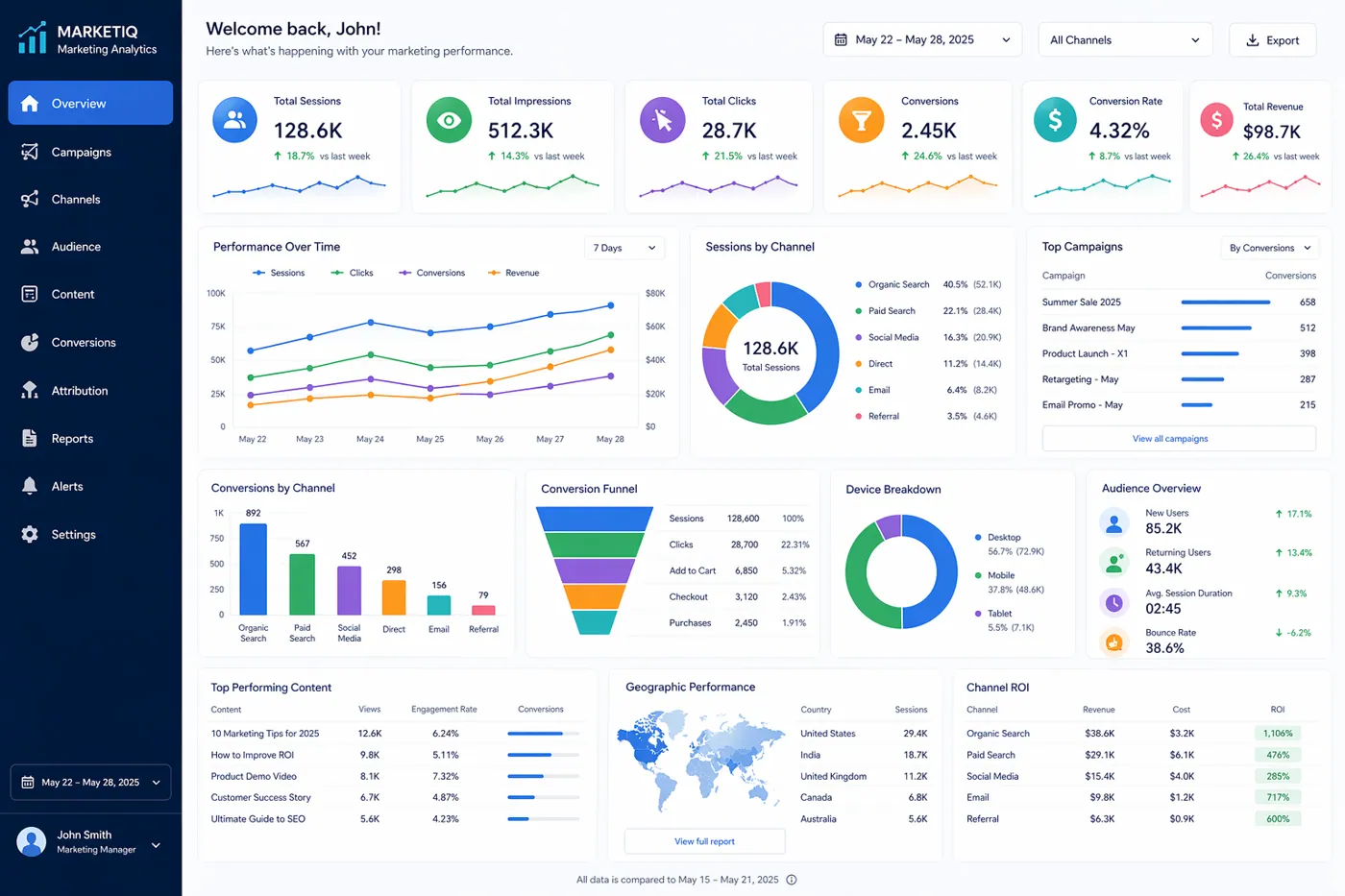
The system enabled users to create and personalize dashboards based on their roles and business needs. This ensured relevant insights for marketing teams, managers, and executives.
KPI tracking
Key performance indicators such as CTR, conversion rate, ROI, and customer acquisition cost were tracked in real time. This helped measure campaign effectiveness and optimize marketing strategies.
Automated reporting
Scheduled and automated reports were generated to reduce manual effort and ensure consistency. This enabled stakeholders to stay informed with accurate and timely performance insights.
Operational Requirements
Scalability
The platform was designed to handle increasing data volumes and the addition of new marketing channels. This ensured consistent performance while supporting business growth and expansion.
User access control
Role-based access controls were implemented to provide different levels of data visibility and permissions. This ensured data security, proper governance, and controlled access across teams.
User Experience
Interactive visualization
The dashboard was designed with intuitive charts, graphs, and visual components to present complex marketing data clearly. This made insights easier to understand, enabling faster analysis and more informed decision-making.
Mobile responsiveness
The platform was optimized for mobile and tablet devices, allowing users to access dashboards anytime, anywhere. This ensured flexibility, real-time monitoring, and better responsiveness to campaign performance.
Our Solution
We developed a centralized Marketing Analytics Dashboard that integrates multiple data sources, processes data in real time, and provides actionable insights through intuitive visualizations.
Data Integration Engine
APIs were connected across multiple marketing platforms to collect and consolidate campaign data. This ensured seamless data flow, real-time synchronization, and a unified view of performance.
Real-Time Analytics Dashboard
Interactive dashboards displayed live campaign performance with dynamic charts and visualizations. This enabled quick identification of trends, anomalies, and performance gaps.
KPI Monitoring System
Key performance indicators were tracked across all marketing channels in real time. This helped teams measure effectiveness and continuously optimize campaign strategies.
Automated Reporting
Scheduled reports were generated and shared with stakeholders automatically. This reduced manual effort and ensured consistent communication of insights.
Predictive Analytics
AI-driven models were used to forecast campaign performance and identify future trends. This enabled proactive planning and data-driven decision-making.
User Access Management
Role-based access controls were implemented to manage user permissions securely. This ensured data privacy, governance, and controlled access across teams.
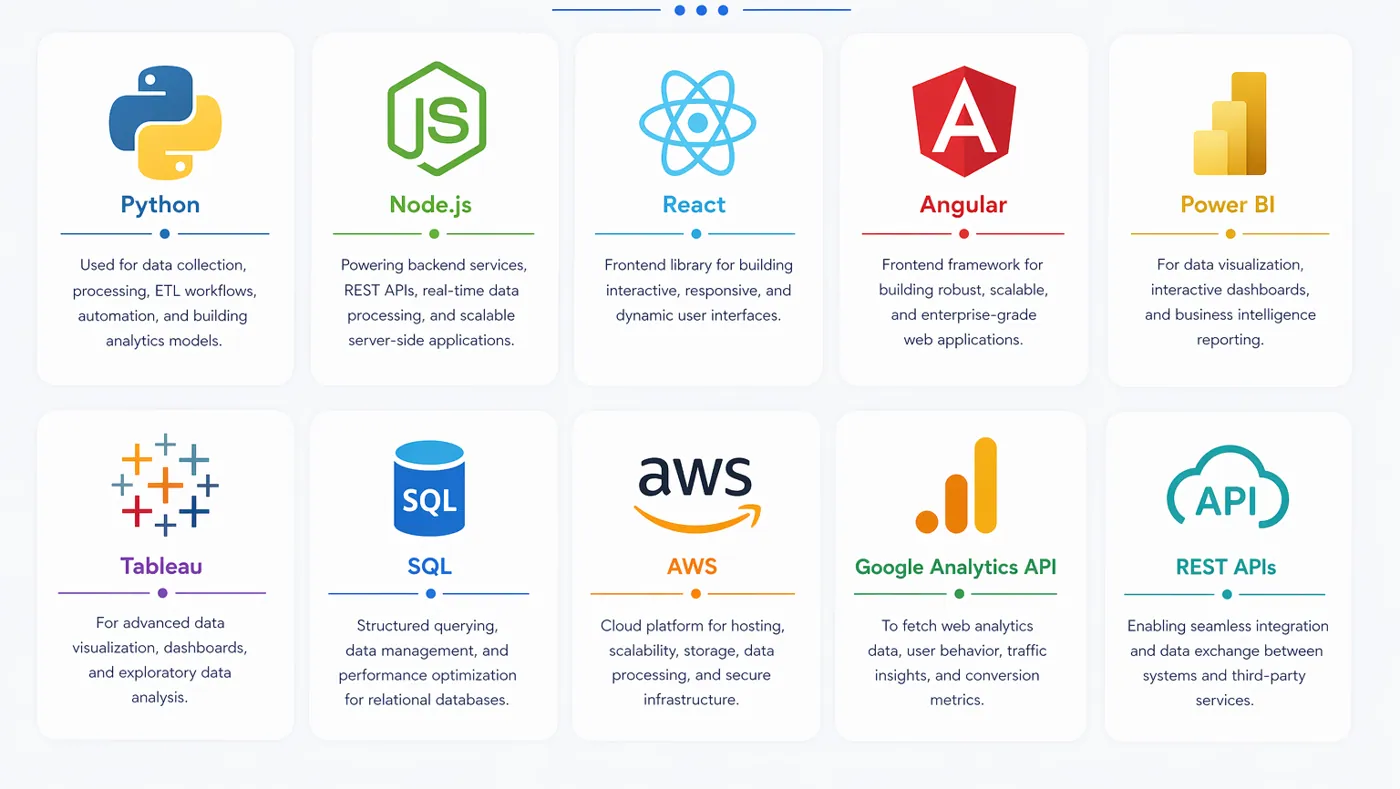
Technologies Used
Key Outcomes
The implementation provided a unified and real-time view of marketing performance, enabling faster and more informed decision-making across teams. By identifying high-performing channels and addressing underperforming campaigns, it significantly improved overall ROI and campaign effectiveness.
In addition, automated reporting and streamlined data workflows reduced manual effort, improved accuracy, and enhanced operational efficiency, allowing teams to focus more on strategy and optimization.
Conclusion
The Marketing Analytics Dashboard successfully transformed fragmented marketing activities into a unified, data-driven ecosystem. It enhanced visibility across channels, improved operational efficiency, and enabled faster, more informed decision-making for campaign optimization.
By centralizing data, automating reporting, and providing real-time insights, the platform empowers teams to respond quickly to performance trends and continuously improve outcomes. It also establishes a scalable foundation for future growth, including advanced analytics and AI-driven marketing strategies.