
Objective
The primary objective of this project was to automate high-volume, repetitive business processes that were consuming significant manual effort and time. The organization relied on multiple disconnected systems, resulting in inefficiencies, delays, and frequent human errors.
The goal was to introduce Robotic Process Automation (RPA) to streamline operations such as data entry, report generation, invoice processing, and system integrations without disrupting existing infrastructure.
Additionally, the solution aimed to improve process accuracy, reduce operational costs, and enable employees to focus on higher-value tasks, thereby increasing overall productivity and business agility.
Customer Requirements
Process Automation Requirements
Automation of repetitive tasks
The client needed to eliminate manual data entry and repetitive workflows. Automation was required to improve speed and reduce dependency on human intervention.
Cross-system integration
Processes involved multiple applications such as ERP, CRM, and legacy systems. Seamless integration was required without modifying existing systems.
Rule-based processing
Business rules needed to be applied consistently across all transactions. This ensures accuracy and standardization of operations.
Operational Requirements
24/7 process execution
The system needed to operate continuously without downtime. This enables faster turnaround times and improved service levels.
Scalability
The solution had to handle increasing transaction volumes. It should support business growth without additional manpower.
Error reduction
Manual processes were prone to errors and inconsistencies. Automation was required to ensure accuracy and reliability.
Compliance & Reporting Requirements
Audit trails
Every automated action needed to be logged and traceable. This ensures transparency and compliance with regulations.
Performance reporting
The organization required insights into process performance. Reports help identify bottlenecks and improve efficiency.
User Experience
Minimal human intervention
Employees should only intervene in exception cases. This reduces workload and increases efficiency.
Easy monitoring dashboard
Users needed a clear view of automation status and outputs. This ensures better control and visibility.
Our Solution
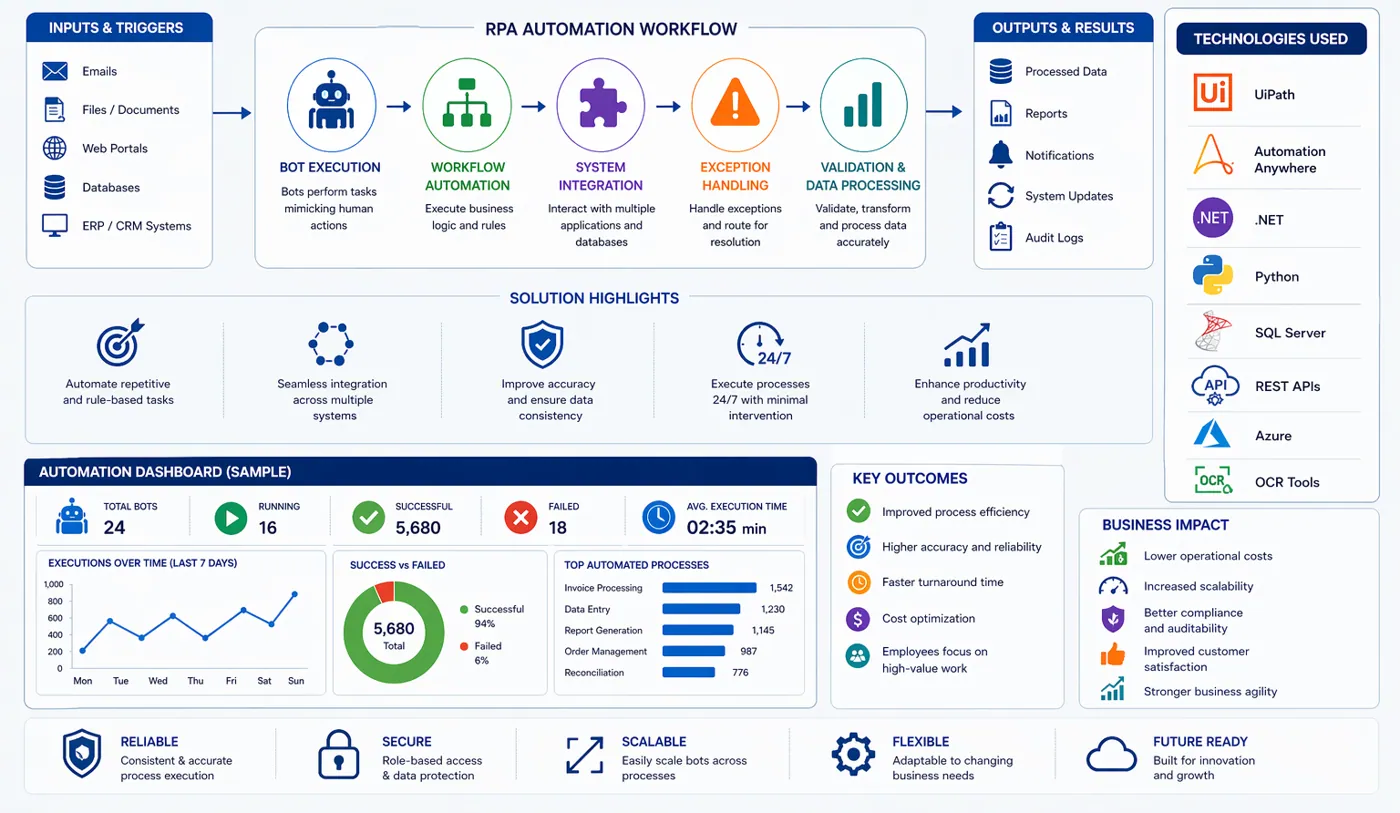
We implemented an end-to-end Business Process Automation solution using RPA bots, integrated with existing enterprise systems to automate workflows and improve operational efficiency.
RPA Bot Development
Custom bots were developed to automate repetitive tasks across systems. These bots mimic human actions with high accuracy and speed.
Workflow Automation
End-to-end workflows were automated including approvals and validations. This ensures smooth and uninterrupted process execution.
System Integration
Bots were integrated with ERP, CRM, and legacy applications. This eliminates the need for manual data transfer between systems.
Exception Handling
Intelligent logic was implemented to handle errors and exceptions. This ensures reliability and continuity of operations.
Analytics & Monitoring
Dashboards provide real-time insights into bot performance. This helps in optimizing processes and improving efficiency.
Scalable Automation Framework
The solution was designed to scale across multiple processes. This enables rapid expansion of automation initiatives.
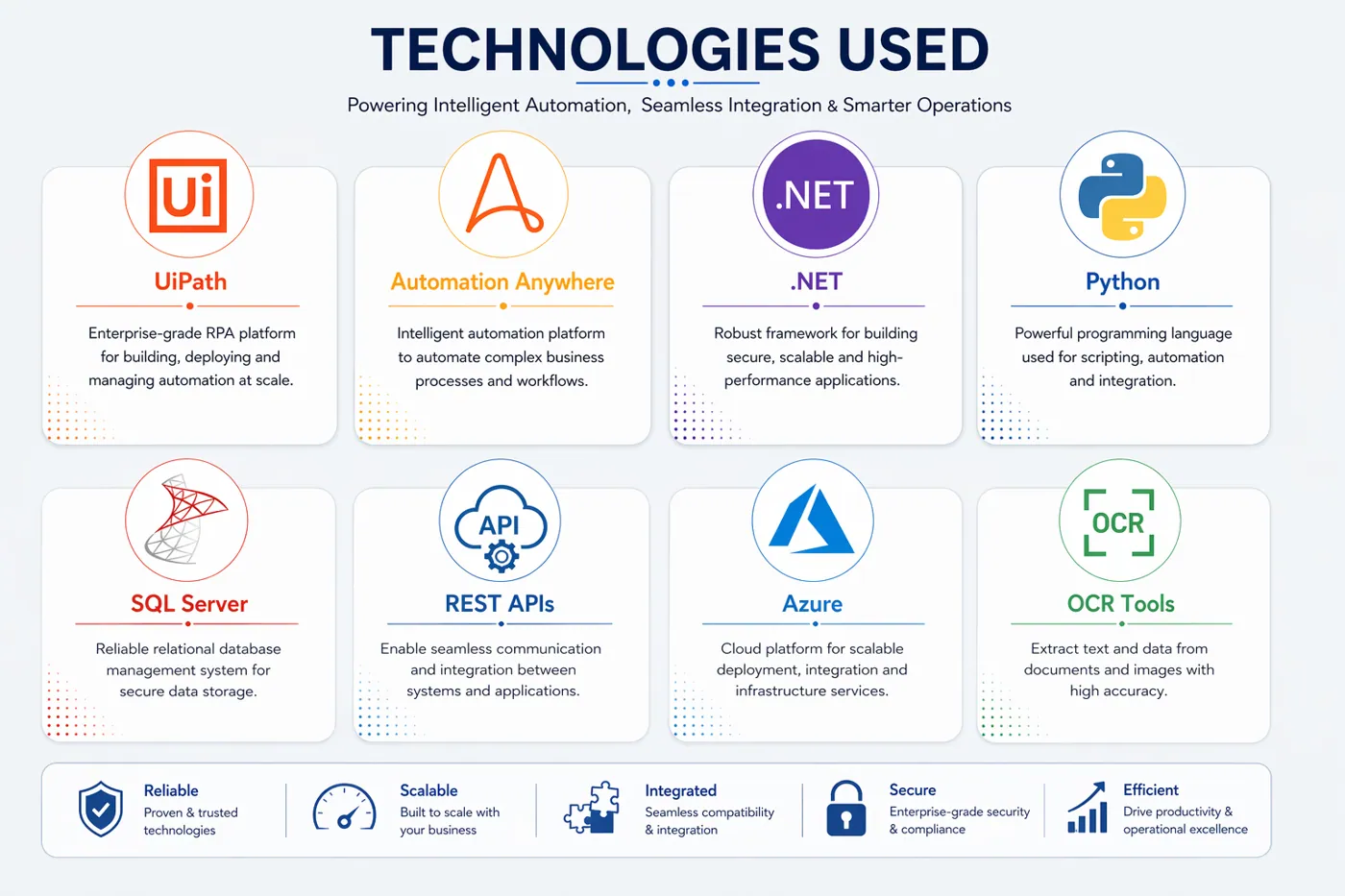
Technologies Used
Key Outcomes
The implementation significantly reduced manual workload, improved process accuracy, and increased operational speed. It enabled faster processing of transactions and reduced turnaround time across key business functions. Additionally, automation led to cost savings and improved overall productivity.
Conclusion
The Business Process Automation solution successfully transformed manual workflows into efficient, automated processes. It improved operational performance, reduced errors, and enhanced scalability. The organization is now better equipped to handle growth while maintaining efficiency and accuracy.