
Objective
The primary objective of this project was to identify and resolve performance bottlenecks in an existing enterprise application experiencing slow response times, high latency, and scalability issues under peak load conditions.
The system was struggling to handle increasing user traffic, leading to degraded user experience and operational inefficiencies. The goal was to optimize both application and infrastructure layers to ensure consistent performance and reliability.
Additionally, the project aimed to implement scalable solutions that support future growth while reducing operational costs and improving overall system stability.
Customer Requirements
Performance Requirements
Reduce application response time
The application was experiencing delays in loading and processing user requests. Performance optimization was required to ensure faster response times and improve overall user experience.
Handle high user traffic
The system needed to support a growing number of concurrent users without performance degradation. This ensured reliability and consistent performance during peak usage periods.
Optimize database performance
Slow database queries were impacting overall system speed and efficiency. Query optimization and indexing strategies were implemented to improve performance and reduce latency.
Operational Requirements
Scalable architecture
The system was designed to scale dynamically based on user traffic and workload. This ensured consistent performance and responsiveness under varying load conditions.
Load balancing
Incoming traffic was distributed across multiple servers using load balancing techniques. This prevented server overload, improved system availability, and ensured reliable performance.
Resource optimization
System resources such as CPU, memory, and storage were optimized for efficient utilization. This reduced infrastructure costs while maintaining high performance and stability.
Monitoring Requirements
Real-time performance monitoring
Continuous monitoring was implemented to track system performance, response times, and resource usage in real time. This enabled proactive detection of bottlenecks and ensured optimal system performance.
Error tracking and logging
A centralized logging system was implemented to capture application errors and system events. This improved troubleshooting, accelerated issue resolution, and enhanced overall system reliability.
User Experience
Faster page load times
The application was optimized to reduce page load times and improve responsiveness across devices. This enhanced usability, improved user satisfaction, and reduced bounce rates.
Consistent performance
The system was optimized to deliver stable and reliable performance under varying conditions and workloads. This ensured a smooth and consistent user experience across all usage scenarios.
Our Solution
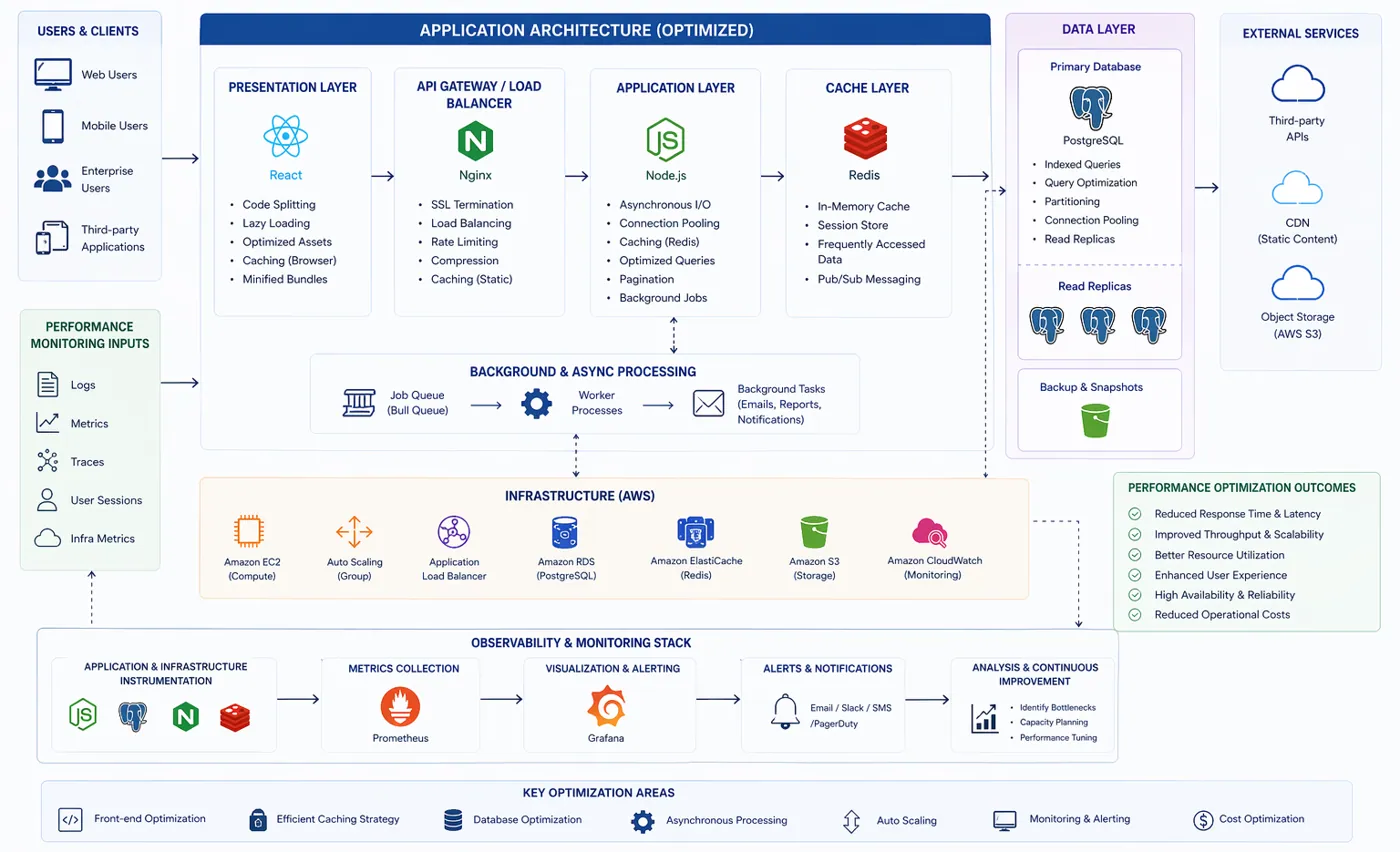
We implemented a comprehensive performance optimization strategy that addressed application, database, and infrastructure layers to improve speed, scalability, and reliability.
Application Optimization
The application was optimized by refactoring code, eliminating redundant processing, and implementing efficient caching mechanisms. This significantly improved response times and overall system performance.
Database Tuning
Database performance was enhanced through query optimization, indexing strategies, and improved data structures. This reduced query execution time and increased overall efficiency.
Caching Strategy
In-memory caching mechanisms such as Redis were implemented to store frequently accessed data. This reduced load on backend systems and improved response speed.
Load Balancing & Scaling
Load balancers and auto-scaling infrastructure were deployed to distribute traffic efficiently. This ensured high availability, scalability, and consistent performance under varying workloads.
Monitoring & Alerting
Real-time monitoring tools and alerting mechanisms were integrated to track system performance. This enabled proactive issue detection and faster resolution of performance bottlenecks.
Cloud Optimization
Cloud resources were optimized through efficient allocation and scaling strategies. This reduced infrastructure costs while maintaining high performance and reliability.
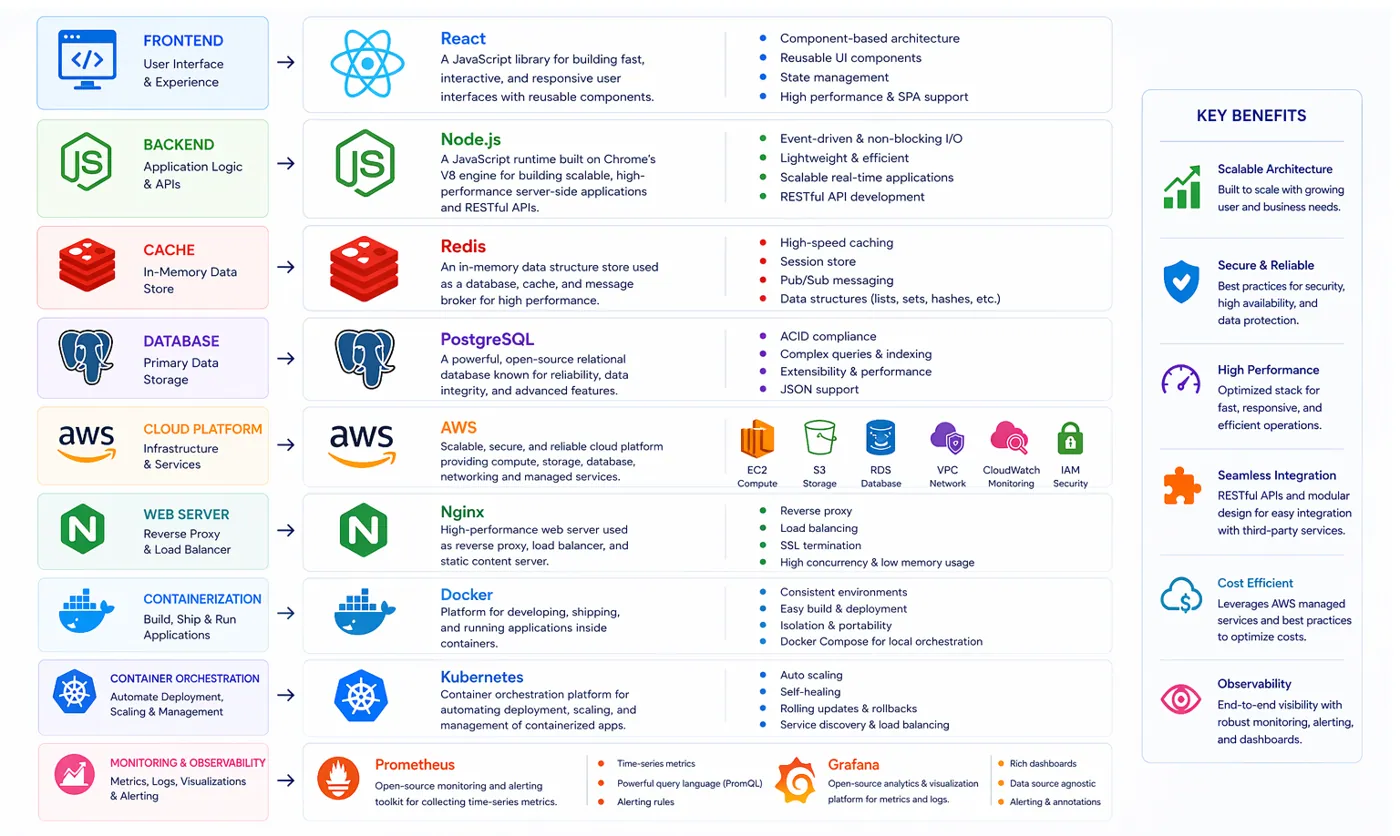
Technologies Used
Key Outcomes
The optimisation work reduced application response times, improved database performance and enabled the system to handle higher user traffic reliably.
Caching, load balancing and auto-scaling delivered consistent performance during peak usage, while monitoring and alerting help the team detect and resolve issues early.
Conclusion
The performance optimisation programme turned a struggling, high-traffic application into a fast and stable platform, ready to scale with future growth.