
Objective
The primary objective of this project was to develop a cross-platform mobile application that provides consistent functionality across Android and iOS devices while maintaining high performance and usability. The organization required a mobile solution to support field operations and real-time data access.
A key challenge was ensuring seamless performance in environments with limited or no internet connectivity. The application needed to support offline functionality and synchronize data once connectivity is restored.
Additionally, the project aimed to deliver a unified user experience across devices while reducing development and maintenance effort through a single codebase approach.
Customer Requirements
Mobile Application Requirements
Cross-platform compatibility
The application was designed to run seamlessly on both Android and iOS devices using a unified codebase. This ensured wider reach, consistent user experience, and reduced development effort.
Offline functionality
The app enabled users to access and update data even without internet connectivity. This ensured uninterrupted operations, especially in remote or low-network environments.
Real-time synchronization
Data synchronization mechanisms were implemented to automatically update information once connectivity was restored. This ensured data consistency and seamless user experience across devices and sessions.
Operational Requirements
Field data collection
The application was designed to capture data directly from field users through mobile devices. This reduced dependency on manual reporting and improved data accuracy and timeliness.
Device performance optimization
The app was optimized to perform efficiently across a wide range of devices with varying specifications. This ensured smooth operation, faster response, and a consistent user experience.
Scalability
The application was built to support a growing number of users and data volume. This ensured long-term usability, stability, and performance as the user base expanded.
Security Requirements
Secure authentication
The application implemented secure authentication mechanisms such as token-based login and role-based access control. This ensured safe user access and protection of sensitive information.
Data encryption
Data stored on devices and transmitted across networks was secured using encryption techniques. This prevented unauthorized access and ensured data privacy and integrity.
User Experience
Intuitive UI/UX
The application was designed with a simple, intuitive, and user-friendly interface to ensure ease of use. This reduced training time, improved user adoption, and enhanced overall user satisfaction.
Fast and responsive performance
The app was optimized for quick interactions and minimal loading times across devices. This ensured smooth navigation, improved usability, and a seamless user experience.
Our Solution
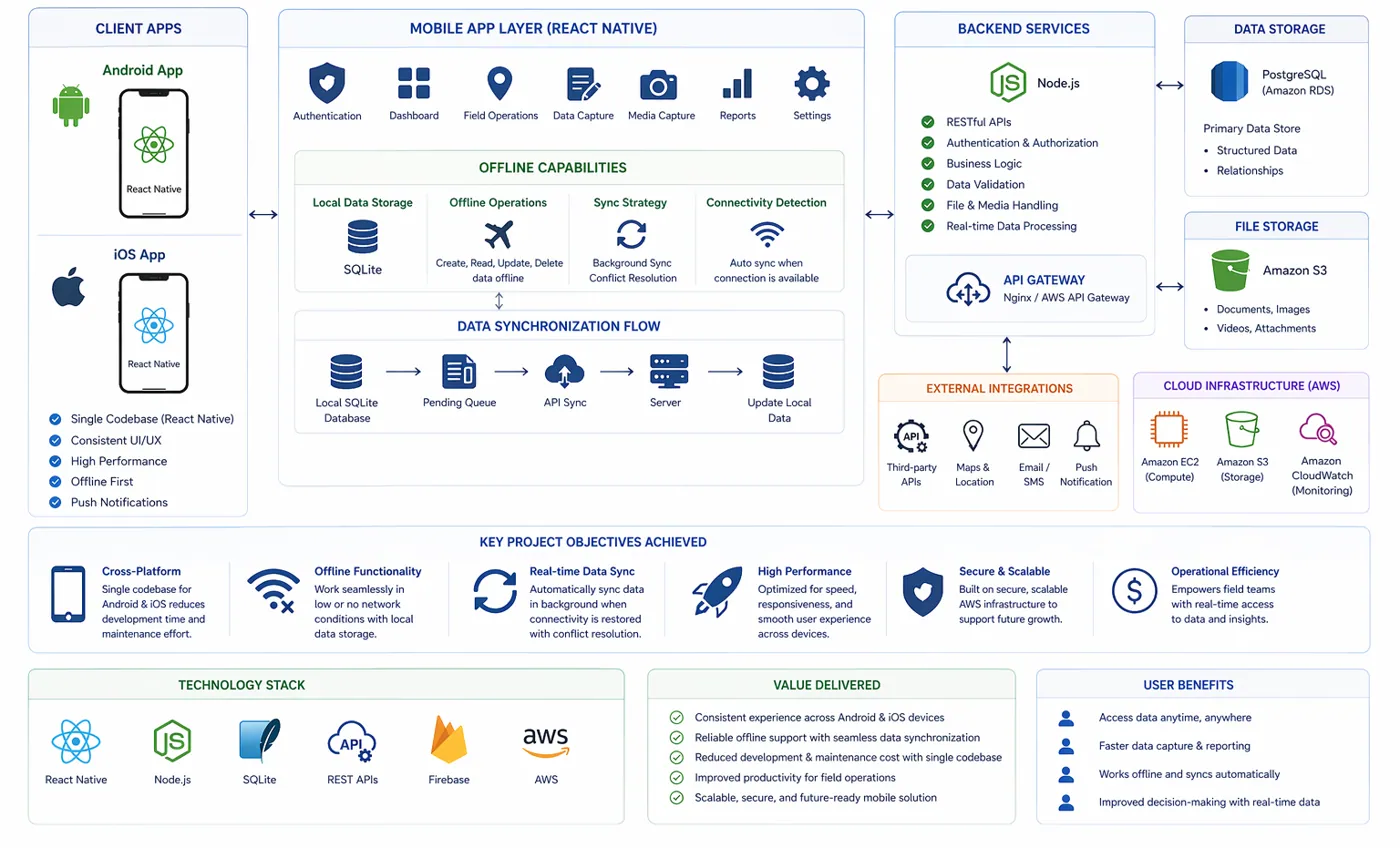
We developed a cross-platform mobile application using a unified codebase, enabling consistent performance across devices while supporting offline-first capabilities.
Cross-Platform Development
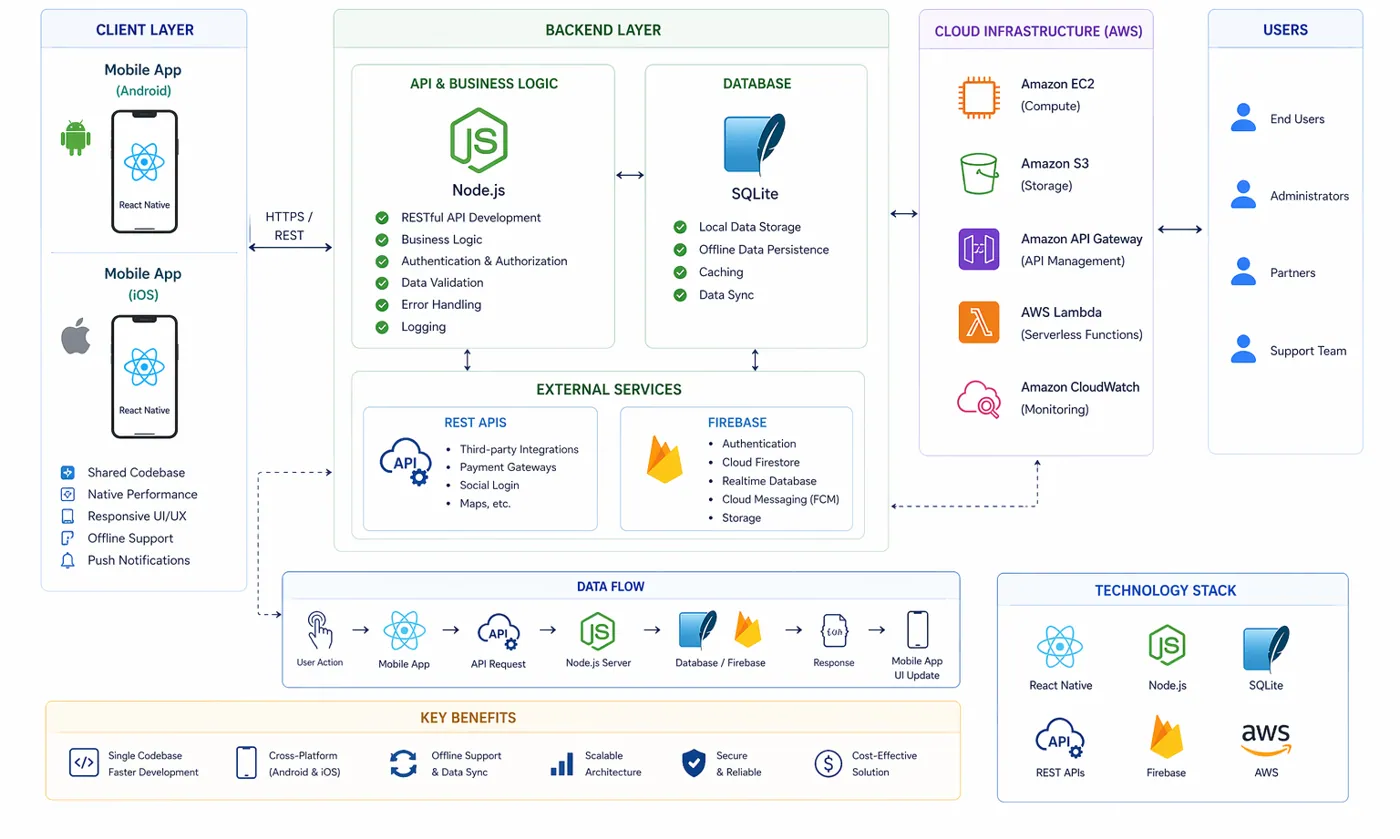
The application was developed using frameworks such as Flutter / React Native with a single codebase. This reduced development time, ensured consistency across Android and iOS, and simplified maintenance.
Offline-First Architecture
Local data storage mechanisms were implemented to enable app functionality without internet connectivity. This ensured uninterrupted usage, with automatic synchronization once the device was back online.
Real-Time Synchronization Engine
Background synchronization processes were designed to update data across systems in near real time. This ensured data accuracy and consistency across devices and backend systems.
API Integration
The application was integrated with backend services through secure APIs for seamless data exchange. This enabled reliable communication between the mobile app and enterprise systems.
Performance Optimization
The app was optimized to perform efficiently across both low-end and high-end devices. This ensured fast response times, smooth interactions, and consistent performance in diverse environments.
Security Implementation
Secure authentication and data encryption mechanisms were implemented across the application. This ensured protection of sensitive data and compliance with security standards.
Technologies Used
Key Outcomes
The implementation enabled seamless mobile access to critical data, improving field productivity and overall operational efficiency. It ensured uninterrupted workflows through offline capabilities and enhanced data accuracy through real-time synchronization.
Additionally, cross-platform development reduced development costs and accelerated deployment timelines, allowing faster time-to-market.
The solution also improved user adoption and engagement by providing a consistent, intuitive mobile experience across devices, ensuring long-term usability and scalability.
Conclusion
The Mobile & Cross-Platform solution successfully delivered a scalable and efficient mobile application that meets modern business needs. It improved accessibility, enhanced user experience, and ensured operational continuity in both online and offline environments.
The platform provides a strong foundation for future mobile innovations and expansion, while enabling faster feature rollouts and seamless integration with evolving business systems.